 litany
The protocol cycle
 Parent A
 Parent B
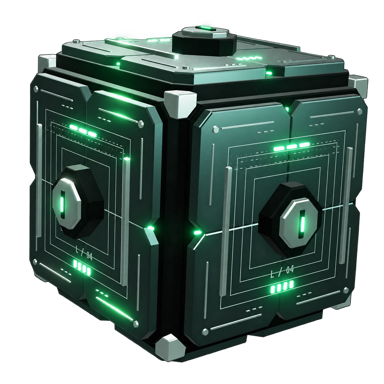 Optional CubePermanently locked
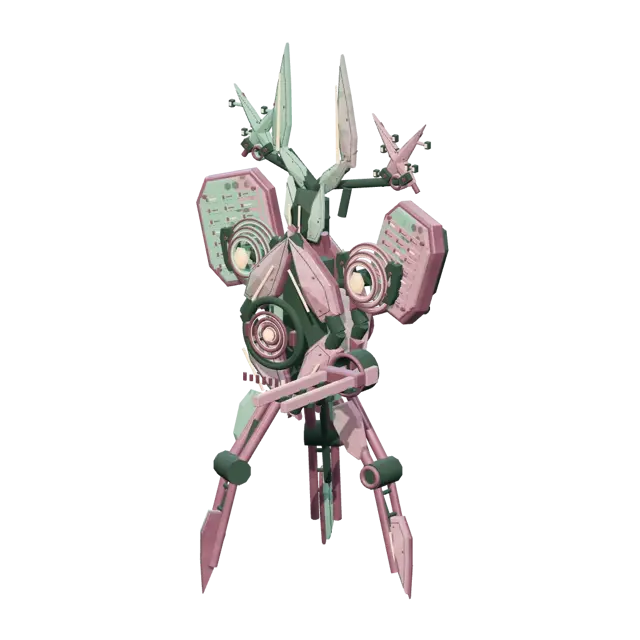 A new childInherits the injected genes
Hollows are the individuals. Every Hollow has a persistent token identity, body genes, appearance genes and a record of origin. Its parts and carried alleles make it a potential parent. Its ancestry connects it to the individuals that produced it.
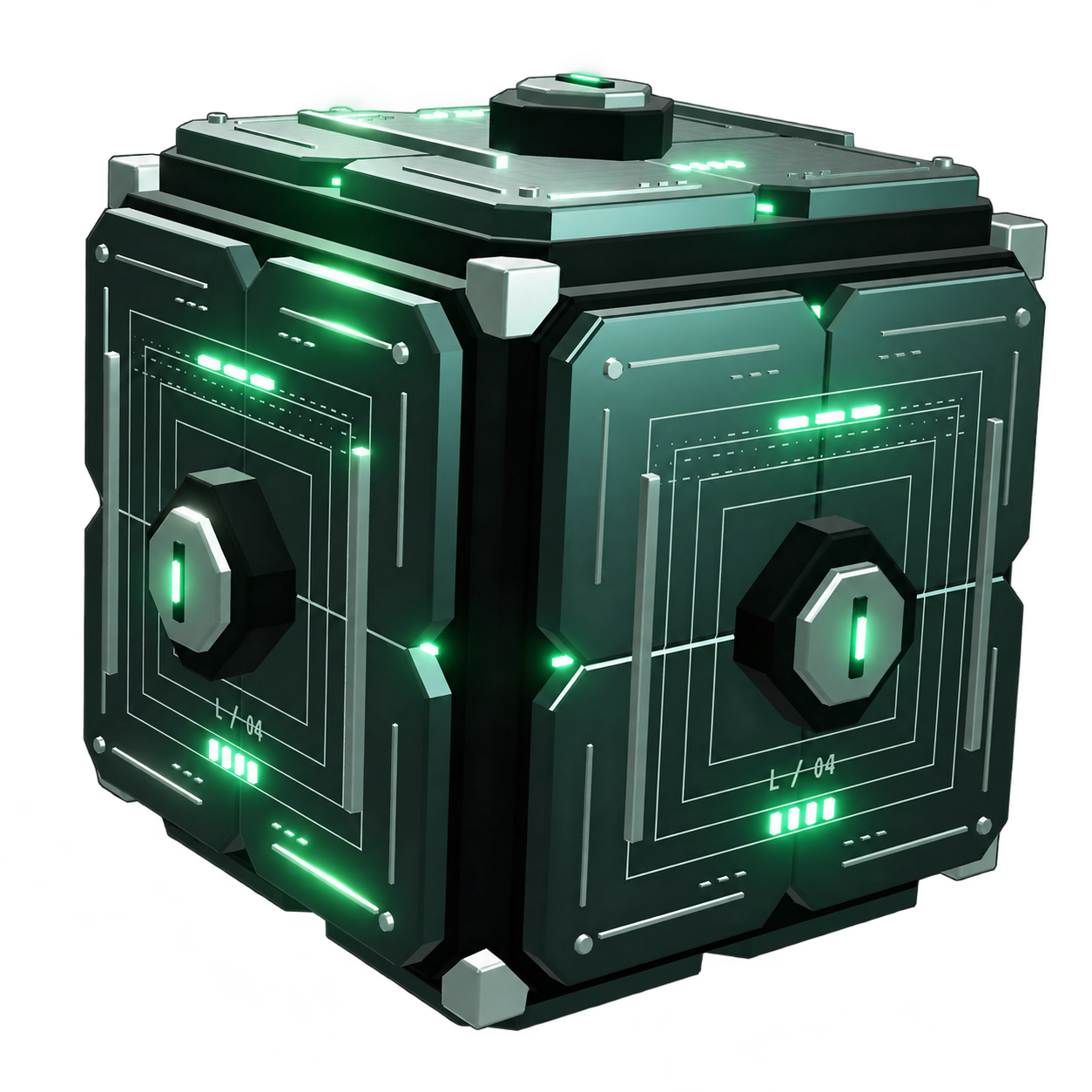
Cubes inject genetics into breeding. Think of a Cube as a CRISPR-like genetic payload: it inserts defined appearance traits into the forming offspring. A collector commits an optional Cube alongside two parents. The Cube locks permanently; its recipe becomes part of that child's birth genome. Neither parent's genetics nor appearance changes.
Cube issuance keeps the trait pool open. LITANY introduces additional Cube editions through primary sales and gamified distribution. Each release defines its supply, allocation rules and trait vocabulary, giving collectors new inputs to bring into established bloodlines.
Synthesis creates descendants. The protocol fixes both parents and the optional Cube at commitment. Parental genes recombine first; the Cube then inserts its traits at the defined appearance loci. The child is born with that genome. Each parent spends one synthesis use and retains its identity, genes and appearance.
LITANY pays for genetic operations. Trait introduction and synthesis connect collecting decisions to token expenditure. Fees divide between retirement and the protocol treasury.
These operations form a repeatable cycle. Select two complementary parents. Add a Cube when introducing new traits. Produce a child. Retain useful combinations and breed those descendants to carry the traits into later generations.
Inside a Hollow
A Hollow's genome has two connected layers: body and appearance. Together they define what the individual carries, what it expresses and what it can transmit.
The body layer contains primary and secondary types, HP / ATK / DEF / SPD bonus genes and four subsystems: Exec, Ward, Flux and Kernel. The part catalog contains 192 entries. Each subsystem carries a dominant allele and two recessive layers. The dominant allele determines the expressed part; recessive alleles remain available to inheritance.
The appearance layer contains two pigment alleles for the base channel, two for the accent channel, a blend value for each channel, and independent pattern, material and emblem identifiers. A pigment can remain genetically present even when its visible contribution is small or zero.
A Hollow retains its origin, parent links, generation and birth portrait. Its birth record captures the genome produced by synthesis, including any Cube injection. The Cube contribution links to the breeding commitment and the resulting child. A parent's existing appearance archive stays intact.
Cube injections target the offspring's appearance genes. Body types, subsystem alleles and stat bonuses travel through normal parental inheritance. This gives collectors two simultaneous objectives: the mechanical composition of an army and its shared visual identity.
How inheritance works
Synthesis commits both parents' body genes, selected appearance genomes and any Cube recipe. Those inputs stay fixed throughout incubation and reveal. Each parent contributes one lifetime synthesis use; the child begins its own seven-use lifecycle.
For every child subsystem allele, the inheritance engine draws from six parental candidates. Each parent's dominant allele contributes 12/32, its first recessive allele 3/32, and its minor recessive allele 1/32 of the combined probability. The same distribution applies to each of the child's three layers. A recessive parental part can emerge as the child's expressed part.
Preserve transfers one parent's complete base and accent pigment arrays with their blend values. It is the mode for retaining a coherent parental palette.
Explore draws one pigment allele from each parent in each channel. A blend value is inherited and has a 1/16 chance of a bounded mutation: a step of eight, clamped to the channel's range. New combinations and blend weights create new expressions from inherited pigments.
Pattern, material and emblem are inherited independently, each selecting one parent's value. A material unique to one parent therefore has a 50% chance of transmission per child. Three such independent design loci all arriving from that parent have a joint probability of 1/8.
These inheritance rules produce the initial combination. An attached Cube then replaces only its specified appearance loci before the child's birth genome is recorded. All other loci follow normal inheritance. Self-pairing, parent-child pairs and siblings are excluded. A 24-hour incubation precedes reveal; maturity governs when the child can breed.
The emergence of new traits
Cubes expand a lineage's appearance vocabulary through a new birth. A recipe targets one to five distinct offspring loci: base pigment, accent pigment, pattern, material and emblem. Its exact traits are fixed before commitment. The Cube stays permanently locked, and the newborn carries the injected genes from birth.
A pigment injection places the same pigment in both allele positions of the newborn's chosen channel. That child is homozygous at the channel: both copies match. Later, in Explore, crossing this Hollow with a non-carrier contributes the introduced pigment to every child. A child carrying two different pigments is heterozygous; crossing it with a non-carrier transmits the introduced pigment with probability 1/2.
When two heterozygous carriers of the same pigment cross through Explore, the child has a 3/4 chance of carrying it and a 1/4 chance of carrying two copies. Blend values and allele order determine its visible contribution. Collectors can therefore select for carriage, visible expression or homozygosity as distinct breeding objectives.
Novelty compounds across loci. Base and accent pigments can combine with separately inherited patterns, materials and emblems. For a vocabulary of P pigments, the four ordered pigment positions alone admit P to the fourth power combinations, before blend values or design traits are counted. Inheritance and the available parental pool determine which combinations are reachable; rendering determines how they appear.
New Cube editions expand the catalog with additional colors and design traits. Primary releases and earned distribution connect those ingredients to different collecting experiences; events, progression milestones and collection challenges provide routes for gamified issuance. Synthesis recombines the ingredients across generations. The injected child starts a new genetic branch; its descendants carry forward the traits they inherit.
The growth of a lineage
Every Hollow has seven lifetime synthesis uses. Each birth consumes one use from each of two parents and creates a child with seven fresh uses. The parents persist. A birth therefore increases the system's remaining reproductive capacity by five uses.
For a cohort of N eligible parents, complete use provides up to floor(7N / 2) births. Under complete use, sufficient LITANY and eligible pairings, successive cohorts expand by approximately 3.5 times. A starting cohort of 200 individuals yields a capacity sequence of 700 children, 2,450 grandchildren and 8,575 individuals in the next generation. This is a capacity model; timing, mating eligibility, spending and collector selection determine realized growth.
Trait frequency follows inheritance through that expanding population. A single introduced material crossed against a non-carrier has a 50% transmission probability per birth. Across seven eligible independent births, the probability of at least one carrier is 127/128. A collector can reinforce a trait by selecting carriers as parents, or combine it with another lineage's distinctive features.
Original editions and inherited traits remain separate records. Pale Host origin identifies direct issuance; white pigments can travel into descendants with their own identities. A Cube's introduction marks the entry point of a trait, while each descendant's genome records what survived.
The result is a branching population: founders, carriers, composite descendants and retired parents whose histories continue through their offspring.
The genetic economy
The protocol connects three inventories: intact Cubes, Hollows with remaining synthesis capacity, and LITANY available for operations. Each has a different role in the collector's budget.
An intact Cube holds an unexercised trait-introduction opportunity. Committing it to breeding reduces tradable intact Cubes and establishes a traceable contribution to one offspring. Recipe caps limit direct introductions. Descendants propagate inherited traits beyond those initial entries, separating scarcity of the source from prevalence of the gene.
Issuance and use shape Cube inventory. Primary sales create a direct acquisition route; gamified distribution ties access to participation and achievement. Each edition carries its own issuance cap. New issuance adds intact Cubes, while trait introduction permanently locks used Cubes. Primary-sale terms govern acquisition; breeding fees and optional Cube surcharges govern genetic operations.
A Hollow combines a genome, an ancestry record, an appearance archive and a finite remaining capacity to produce children. Each synthesis spends one use from both parents. As parents exhaust their uses, descendants become the continuation of the line. Collectors weigh a desirable genotype against the cost and remaining opportunities required to reproduce it.
Synthesis charges F(uses A) + F(uses B) + the optional Cube fee in one commitment. Each parent's fee rises with its lifetime use count. A fresh pair costs 150,000 LITANY; one Cube adds 2,500. The protocol authority can adjust fees, while paid commitments retain their price and fixed genetic effect.
50% of operation fees goes to the fixed retirement address; 50% goes to the treasury. Retirement removes tokens from accessible inventory. Nominal ERC-20 supply remains one billion LITANY. Treasury funds remain a separate inventory available for protocol operations under treasury control.
For a fee pool of 1,000 LITANY, 500 is retired and 500 accrues to treasury. Repeated operations accumulate retirement according to actual use. Population capacity can expand while available token inventory contracts; fee levels, token circulation and collector budgets jointly determine the pace of realized growth.
From a collection to an army
An army is a collection with an organizing genetic objective. A collector can pursue a shared palette across different body types, a signature material across generations, or a set of complementary subsystem combinations beneath one emblem.
Newborns establish new branches. Add a Cube to a chosen pairing. Its offspring becomes the entry point for those injected traits, while both parents retain their existing genomes. Descendants extend the branch through parent links and inherited genes.
Carriers preserve options. Recessive parts and partially expressed pigments widen the parental pool beyond visible thumbnails. A collector who reads the genotype can find useful inputs across visually different assets.
Composite lines assemble combinations. Cross a material-bearing line with a pigment-bearing line, then select offspring that retain both. Later crosses can add another pattern or emblem. Every retained combination becomes an input to the next generation.
Birth records preserve origins. The child's genome records the result of parental inheritance and any Cube injection. Its Cube provenance identifies the entry point; descendant genomes show which traits actually survived.
Reserves control timing. Holding an intact Cube preserves the choice of which future birth receives its traits. Holding a suitable parent preserves its remaining synthesis capacity. Spending LITANY commits those inputs to a specific genetic operation.
These choices create collectible markets around origin, carried alleles, expressed appearance, remaining capacity and lineage composition. A collector's army becomes a record of deliberate selection: which inputs entered, which combinations survived and which bloodlines continued.