 litany
Equal command
Three formations for every passport. Free field frames keep you competitive. A rare appearance never buys stronger base combat stats.
LITANY / THE MESH / FIELD GUIDE 002
Command three Hollow formations. Claim the ruins.
Discover Cubes that begin new lineages.
INTERACTIVE DESIGN PREVIEW · GAMEPLAY IS NOT LIVE
01 / THE COMMAND TABLE
Your Card opens the frontier. Choose a formation, give it an order, and let the world resolve together. Try the full discovery loop below—no wallet needed.
 1. Claim a hexMove your army into adjacent ground.
 2. Discover a CubeSecure a site, then excavate its memories.
 3. Create a lineageMint an earned Cube. Use it at a Hollow’s birth.
March one adjacent hex. Your other formations hold their positions.
 MEMORY ARCHIVEObjective · hex 0,0
 010203
Move into one adjacent hex.
Resolve instantly in training. The world moves in daily simultaneous turns.
 0/6Fragments
 0/2Siege
 0/3Fortification0Insights
Select the central ruin (0,0), then March. Your other two formations hold the opening ground.
Local teaching simulation. You command Vanguard; the other 11 formations illustrate battlefield scale and hold their positions. Curated outcomes and accelerated renewal, not the full combat resolver. No live match, wallet connection or rewards.
02 / A WORLD THAT MOVES TOGETHER
Make a considered move. Let everyone else make theirs. A daily cadence gives different time zones room to plan, while sealed orders keep rivals guessing.
Choose adjacent moves, position your garrison and commit sealed orders. Everyone plans against the same resolved world.
Prepare tomorrow’s encrypted order while today resolves. A delayed start requires a fresh review of a stale queue schedule.
Three formations for every passport. Free field frames keep you competitive. A rare appearance never buys stronger base combat stats.
Native defenders have visible roles and tiers. Claims need routes. Reinforcement has limits. Research opportunities are announced in advance.
Protected homes, free fallback formations and evacuation keep a defeat from becoming a demand to pay before you can play again.
03 / THE SEVEN-DAY CHORUS
Every chapter shifts the reasons to fight. Hold a site with a supplied garrison for two consecutive turns. Turn that control into research that changes your next campaign.
MEMORY ARCHIVE
The makers left their names in the walls. Recover eight Archive insights to grow from 12 to 24 non-home claims.
CAPACITY / 8 INSIGHTS
CHOIR RELAY
Wake the old conduits. Eight Relay insights unlock a forward camp, carrying your supply frontier deeper into the Mesh.
LOGISTICS / 8 INSIGHTS
GENESIS CRUCIBLE
Turn recovered knowledge into a common Cube. A repeat craft can use three Crucible insights and six fragments.
CREATION / 3 INSIGHTS + 6 FRAGMENTSA critical site holds five insights. Your Card can take three, leaving a reason for someone else to challenge. Research is finite progression, not passive token yield.
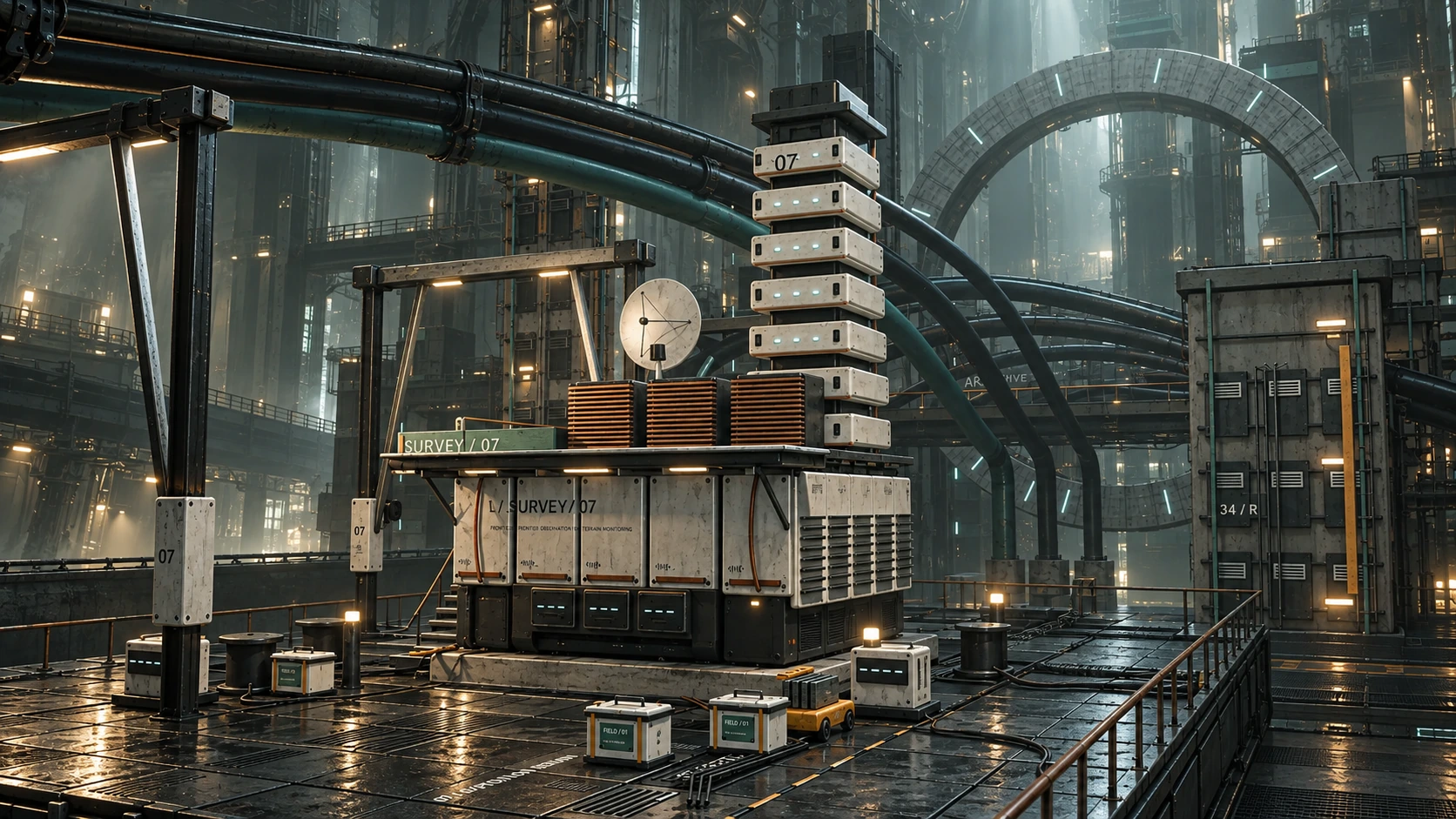
FIELD RECORD / THE FRONTIER
Supply flows through connected holdings, up to six links from home or camp. One severed route can matter more than another battalion.
World concept artwork04 / THE DEFENSE LAB
LITANY can buy a bounded defensive advantage. It cannot buy invulnerability. Change the conditions and see exactly when that advantage disappears.
CHANGE THE POSITION
After role, defender advantage, preparation and fatigue; before the modifiers below.
Defender win interval across the 10,201 possible jitter pairs. Bounds account for unresolved tie priority.
An equal baseline moves to about 59% with +10. Multi-army contests, role changes and native qualification require the full resolver; this is not a universal win-rate forecast.
+10 power for a supplied stationary garrison. At most two purchases per wallet per turn. No stacking, no extra commands, and no bonus above full earned fortification.
A completed turn is charged even if there is no attack or you lose. An unfinished, irreversibly aborted turn refunds its payer. Prices will be published before activation.
Named Hollows can require LITANY restoration, within a shared recovery cap. Payment never skips cooldown. Free field frames remain a competitive way to continue.
05 / THE CHROMATIC RECORD
Every Cube family belongs to a place in the ruined world. The opening lore palette spans twelve families and five depths of recovered knowledge. Future approved editions can go beyond it.
The quiet strata preserve the names of vanished makers.
Introduce a heritable color at a child’s birth. A discovery’s provenance survives as the color spreads through later generations.
Authored lore and palette concepts, not currently issued game editions. Depths are knowledge, not combat tiers. Final recipes and artwork require publication.One per eligible excavation. Two per Card per UTC planning-start day. A hex renews each seven-day world cycle.
Six fragments for a first common craft, then 12 and 24. Rare draws depend on advertised, finite edition stock.
A finalized earned receipt can authorize one approved mint. New Mesh issuance awaits issuer activation; this preview creates no entitlements.
06 / THE LINEAGE CONTINUES
The expedition returns with a Cube. Synthesis introduces its approved ingredient into a new Hollow. That child can become the origin of an entirely new branch.
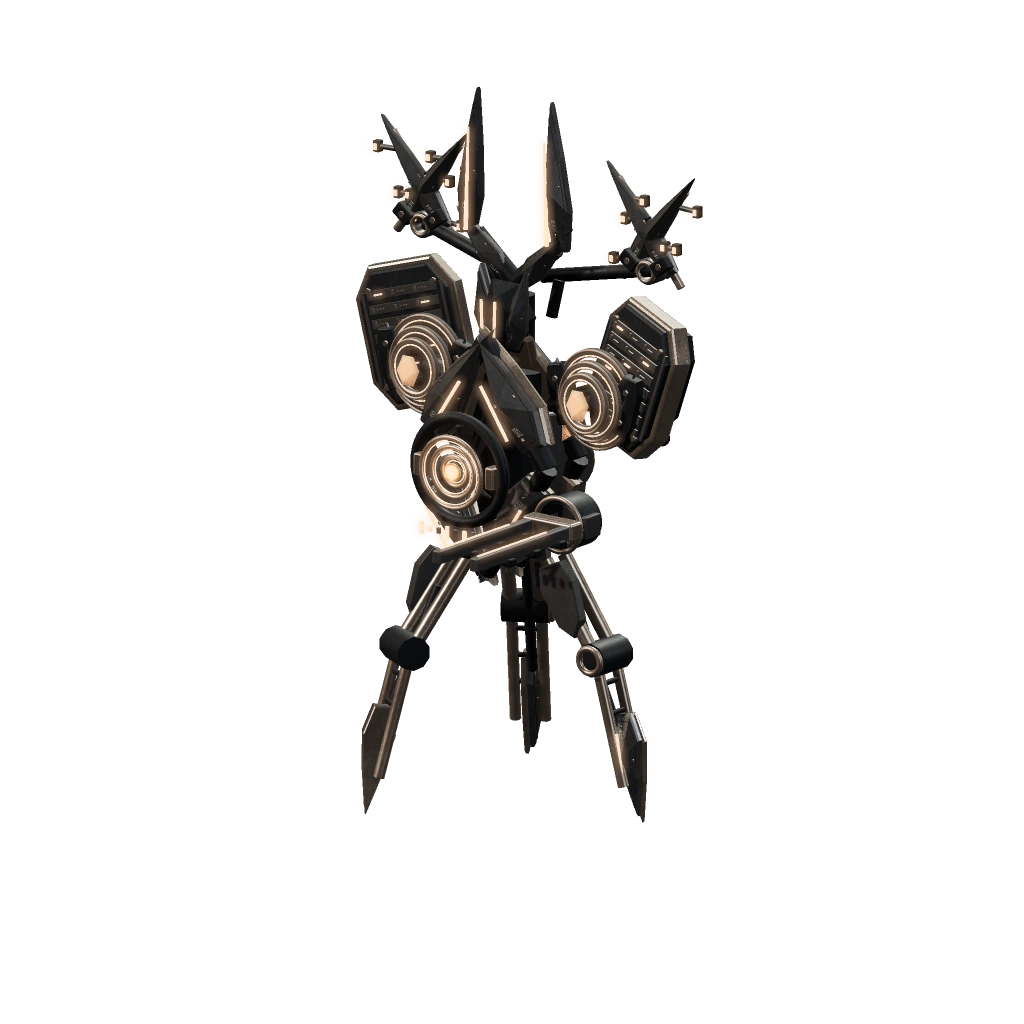 SPECIMEN / SIGNAL
The Cube acts at a child’s birth. It does not recolor the parents or rewrite their provenance.
Synthesis permanently locks the Cube for one birth. Every new edition needs an approved recipe, cap and renderer-supported trait.
A descendant may inherit the allele without another Cube. Original introductions are finite; the color itself can spread.
Earn collectibles through play. The design does not promise cash returns, token yield or permanently rare descendants. Existing Cube editions keep their own established recipes.
07 / BEYOND THE NEXT FRACTURE
Connected regional meshes make room for new expeditions. Scarce research rotates within them. Rare Cube supply remains globally bounded as the atlas expands.
Illustrative capacity at a target of 48 occupants per region, below its 64-player ceiling. Growth also needs verified demand, common Cube stock and measured chain capacity.
1344 total passport slots · 3000 formation slots
Diagram shows a sample of the atlas. This is a capacity plan, not a throughput benchmark.Travel to an adjacent region, abandoning local claims. Your passport, discovery history and recovery debt travel with you.
Ordinary departures have a seven-day interval. Forward camps also have a seven-day relocation cooldown.
After two observed turns completely enclosed, free evacuation opens a path out. Aborted regions also permit evacuation.
08 / THE COMPLETE FIELD MANUAL
Entry, combat, rewards, spending, travel, contracts and operational limits. Search a concept or open a chapter for the full design.
Your Card is a persistent passport into a shared, factionless world.
A Litany Card enrolls one global passport. Begin at a protected home with two controlled neighboring hexes. Opening protection lasts eight days from first enrollment.
Command three formations, with up to three Hollows in each. Free field-frame formations use the same normalized base combat power. Collectible appearance does not purchase superior combat stats.
Travel never resets your starter craft, discoveries, protection age or NFT recovery debt. Holding several Cards does not prove several people; the design does not promise immunity to coordinated accounts.
The Awakening faction map remains a historical record. This competitive Mesh begins with independent operators. Factions are a later design direction, not a launch requirement.
A daily strategy game designed for people who live in different time zones.
Every normal turn gives 22 hours to plan. Each formation chooses Hold, March, Excavate, Fortify or Siege. March targets an adjacent hex; taking it and excavating it require separate turns.
Planning is followed by 15 minutes of reveal and bounded settlement. The next planning phase starts no earlier than 24 hours after the prior start. A delayed settlement never shortens the next planning window.
Encrypted orders can be prepared for the next turn. They bind its expected start; if that start changes, the stale schedule requires a fresh review. A queued order does not overwrite an existing direct commitment.
An unrevealed formation Holds, gains fatigue and loses preparation. Missing delivery alone does not injure a Hollow or create a repair bill. Orders and settlement are separately recoverable operations.
Your frontier is a network of defensible connections, not an endlessly growing stat bonus.
Start with 12 non-home claims, including the two opening hexes. Eight Archive insights increase the budget to 24. Claims persist until captured, relinquished or abandoned through regional departure.
Connected owned hexes carry supply up to six links from home or an earned camp. A disconnected army suffers a combat penalty and cannot collect research insights. Supply is computed from the map, not sold as a proof.
Eight Relay insights unlock a forward supply anchor. It requires an owned, connected garrison; relocation has a seven-day cooldown. Camps turn research into a new frontier.
Unclaimed hexes have procedural, stationary defenders with a visible role and tier. Every contender must defeat the native defense individually before qualifying for the player contest. Weak unqualified attackers cannot hand another player a native victory.
Role matchups, preparation, logistics and simultaneous commitments determine the fight.
The contract scores qualifying formations using normalized power, cyclic role matchups, defender advantage, fortification, fatigue, supply and seeded variation. Seeded priority breaks equal scores. Transaction arrival is not the combat tiebreaker.
In a two-force comparison, a cyclic role edge contributes ±120, defender advantage +100, each earned fort step +40, each fatigue step −60 and missing supply −120. Seeded variation ranges from −50 to +50. The paid +10 is deliberately smaller than these positional levers.
Earned fortification is capped at three steps. Paid reinforcement gives a smaller, temporary +10 power only to a supplied, stationary garrison. It cannot stack on a cell or add to a fully fortified hex.
Two consecutive Siege orders disable earned and paid fortification for the following turn. Cutting supply or forcing a garrison to move removes its paid benefit. Role advantage and logistics remain meaningful.
Named Hollows can incur NFT-bound repair debt and a formation cooldown. Paying restores eligibility; it does not skip the cooldown. Withdrawing the NFT cannot erase the debt. Free field frames let you keep playing.
Every seven-day chapter puts new reasons to compete on the map.
A Chorus is published at least 48 hours before it starts. Thirty-two sites are selected from 98 junctions. Every starting home has a site within six hexes geometrically; a safe owned route is still something to win.
Hold a research site with a supplied garrison for two consecutive resolved turns. Losing control or supply resets the streak. The whole regional turn must finalize before insight becomes usable.
Twelve critical sites carry five insights each; twenty ordinary sites carry two. One Card may collect at most three from one site per chapter. Critical sites retain something for a challenger. These are finite progression credits, not cash yield.
Memory Archives unlock claim capacity. Choir Relays unlock forward supply. Genesis Crucibles let a repeat common craft use three insights and six fragments instead of its normal 12 or 24 fragments.
Cubes begin with activity on the Mesh. Ownership of land alone does not print rewards.
A successful eligible excavation yields one finalized fragment. A Card can receive at most two per UTC planning-start day. A cell renews each seven-day world cycle; it is not exhausted forever.
Six fragments craft the first common Cube, from a family reserved once for that Card at enrollment. Later common crafts cost 12, then 24 fragments. Repeat crafts choose from currently available common stock.
For native tiers one through four, configured rare draws are 8%, 4%, 1.5% and 0.5%, conditional on advertised edition stock. These are per eligible draw, not a promise of a drop or a measure of market value.
Immutable edition caps and preannounced regional allocations bound rare supply globally. Adding another region must not duplicate the rare pool. Common onboarding capacity is reserved separately from rare scarcity.
An earned Cube can become an onchain object, then a new ingredient in a Hollow lineage.
Finalized gameplay creates an eligible reward receipt. A narrowly approved issuer would redeem that receipt once into the existing Cube NFT contract. A front-end button or a client score is never mint authority. Game issuer deployment is currently parked.
A new edition needs a published CubeBreeding recipe, frozen metadata and cap, matching lore commitment, supported catalog patches and enough direct introduction capacity. Its announcement precedes availability by at least 48 hours.
Synthesis uses the Cube as an ingredient at a child’s birth and permanently locks it for that use. Parents retain their genes. The child may pass the introduced allele to descendants without another Cube.
Existing live Cube NFTs retain their established synthesis compatibility. Mesh issuance introduces approved new editions; it does not redefine previously minted ones. Pigment, pattern, material and emblem designs require a supported recipe and renderer path.
The economy supports restoration, bounded defense and collectible creation.
One paid bonus per cell and no more than two purchases per wallet per turn. The fee is escrowed. A completed turn is charged even if nobody attacks, supply is cut, the formation moves or the defense loses.
An unfinished, irreversibly aborted turn refunds the original payer. Charges and refunds cannot execute twice. A later abort does not refund earlier completed turns. Settlement is permissionless after the outcome exists.
Named Hollow repair has a shared conservative 720-hour spending cap. Earlier payments may remain counted for less than one extra day. Free formations remain available; payments never grant extra command slots.
Players earn fragments, progression and eligible collectible discoveries through play. There are no kill bounties, passive LITANY emissions or guaranteed cash returns. Collectibility and resale demand are uncertain; Cube ancestry is the durable record.
Launch LITANY prices are not set. Published test fixture amounts are not prices. Treasury transfers are not token burns. If reinforcement costs P, the maximum for 30 turns is 60P, with restoration accounted for separately.
Connected regional meshes keep each turn bounded while the world can grow.
Each registered region supports 64 active passports and three formation slots per player. Expansion planning targets around 48 occupants with verified admission demand, reconciled free homes, common reward stock and measured settlement capacity.
Travel goes to an adjacent atlas region. It releases local claims and returns NFTs atomically. Ordinary transit takes at least 24 hours; ordinary departures are at least seven days apart. Your global history stays with you.
Two consecutive observed turns of complete hostile enclosure, or an aborted region, permit free evacuation with at least 48 hours transit. Failed destinations can be rerouted without a new payment.
Inactive passports retain homes. There is no automatic eviction or region merge. Expansion needs chain throughput and operating capacity. Map size is not evidence of infinite transaction throughput.
A useful public design is explicit about who verifies, who operates and what is still pending.
Registration, formations, sealed commitments, combat resolution, ownership, research, reward entitlements, payment closure and recovery live in bounded contract modules. Finality gates spendable rewards.
Wallet consent, encrypted delivery, indexers, read models, admission reservations and settlement workers move data and submit transactions. Canonical chain events remain the source of truth, with reorg rollback and restart recovery.
A local 64-player / 192-stationary-formation replay used about 55.0 million settlement gas in total, with a largest transaction of about 4.28 million. This is a capacity sample, not a production stress test or a worst-case guarantee.
The connected-world release candidate passed ten local integration scenarios, including earned Cube minting and synthesis against retained live-contract artifacts. Public gameplay, issuer activation, independent security review and production load validation remain release gates. The command table on this page is a local teaching simulation.
RELEASE RECORD / CONNECTED WORLD 01
The contract and infrastructure candidate has local integration coverage for the connected world, including paid defense and earned Cube → mint → synthesis. Public gameplay and the game Cube issuer are not activated. Independent security review and production load testing remain required.